We scored 0% on Scribbr's AI detector. Zero. Not even a trace.
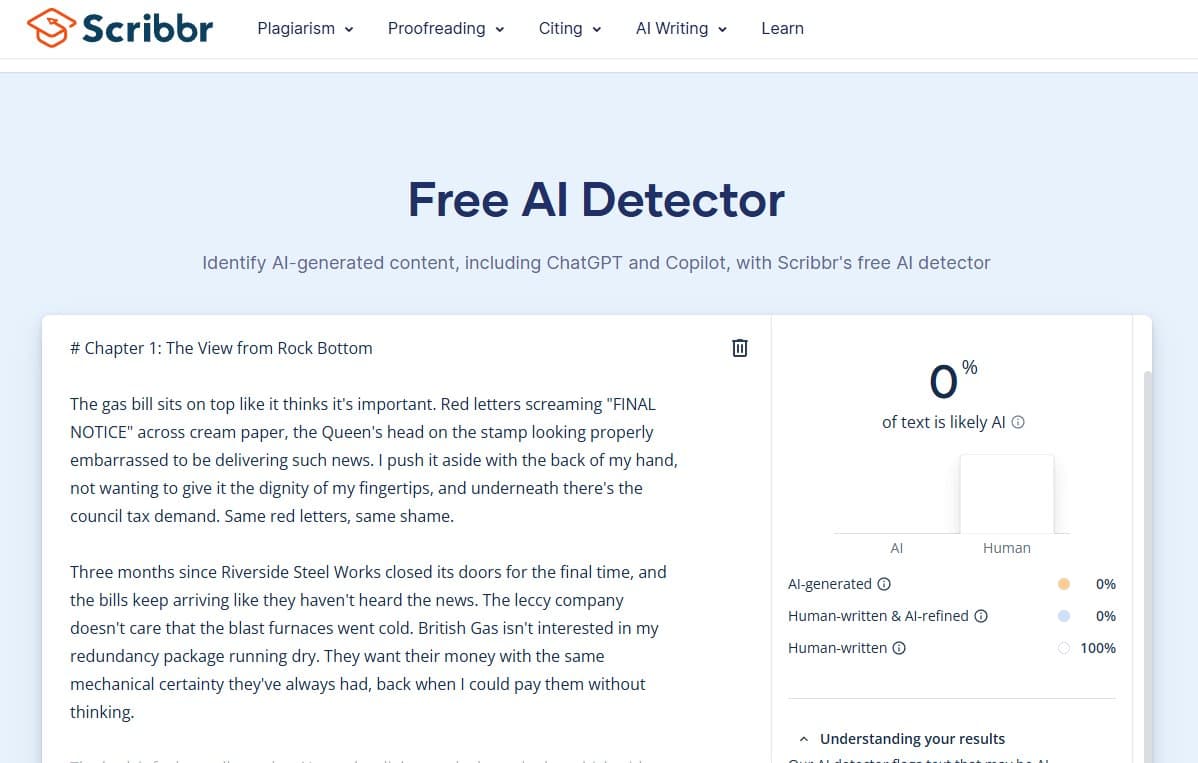
Scribbr uses the same detection engine as Turnitin. We ran our AI non-fiction through it. The result: 0% AI-generated, 100% human-written. Here's the editorial engine behind it.
AI-generated text has a fingerprint. Not one pattern — dozens. Sentence rhythms that never vary. Emotions explained after they've already been shown. Every character speaking with the same polished vocabulary. A suspicious, uniform quality across every paragraph.
AI detectors are built to find these patterns. The good ones — like Scribbr's detector, which uses the same technology that powers Turnitin — are remarkably accurate. They don't just look for individual tells. They measure statistical consistency across the entire text.
Last week, we ran a chapter of AI-generated non-fiction through Scribbr's free AI detector.
The detector couldn't find a single statistical pattern suggesting the text was generated by a machine. Every paragraph, every sentence, every phrase registered as human-written.
What we tested
The chapter is called “The View from Rock Bottom.” It's narrative non-fiction — the story of a steelworker in Rotherham who loses his job when the local steel works closes. He watches his son through a window. He avoids his support worker's phone calls. He makes tea he can't taste.
It was generated entirely by AI using the Ghostproof editorial engine. No human editing. No “humaniser” tools. No synonym shuffling. Raw output.
We chose non-fiction deliberately. Fiction gives AI places to hide — plot twists, magical systems, genre conventions. Non-fiction strips all of that away. You're left with voice, specificity, and truth. A man in a bedsit in Rotherham doesn't allow you to fake authenticity.
The comparison
Same underlying AI. Different editorial intelligence applied to the output.
What the engine catches
Ghostproof isn't a different AI model. It runs on Claude, the same model anyone can use. The difference is what happens between the model's output and what you read. Over 250 editorial rules run on every chapter.
Why this matters
The publishing industry is grappling with a flood of AI-generated content. Most of it is obvious — the same rhythms, the same vocabulary, the same emotional shortcuts. Detectors exist because the market needs a way to distinguish between AI-assisted writing that's been thoughtfully crafted and AI-generated text that's been dumped without editorial intelligence.
Ghostproof exists for writers who want to use AI as a tool but produce work that reads like it was written by a person — because editorially, it was. The AI generated the raw material. The engine shaped it into something that passes both editorial review and AI detection simultaneously.
Ghostproof is a UK-based AI book production engine. The editorial engine applies 250+ rules to every chapter, producing fiction and non-fiction that passes editorial review and AI detection simultaneously.